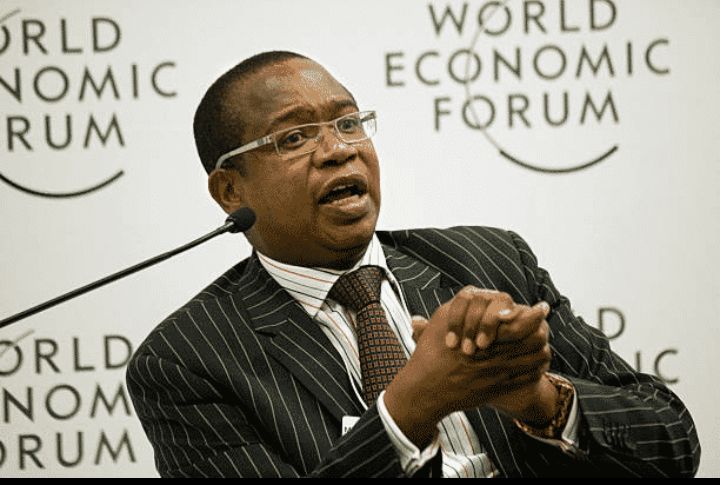
Natalie Nyathi
Zimbabwe is struggling with a staggering $21 billion debt that has kept it out of global financial markets since it defaulted in 1999. In an effort to address its long-standing debt issues, Finance Minister Mthuli Ncube has reached out to ten nations for financial assistance. He recently wrote to Algeria, Brazil, China, France, Germany, Italy, Japan, South Africa, the United Arab Emirates, and the UK, requesting $2.6 billion in bridge financing to help repay debts owed to multilateral lenders, including the World Bank, the European Investment Bank, and the African Development Bank.
However, Zimbabwe has not received any concrete commitments from these countries. Ncube described the responses as mixed, stating, “Some of them are very warm, some of them not so warm. You will get a varied response.” A significant hurdle in securing the needed financing is that seven of the contacted countries, including China and Germany, are already creditors to Zimbabwe. Additionally, Brazil has indicated that it is unwilling to contribute.
Given the large amount of funding sought, Ncube emphasized that it is unlikely a single nation will act as a sponsor. “It has to be several countries,” he said, noting he sees at least three countries stepping in to help.
In addition to seeking international support, Zimbabwe may explore other avenues to raise funds for debt repayment, including potential asset sales. Ncube mentioned this possibility but did not provide specific details. The country is also pushing for an International Monetary Fund (IMF) staff-monitored program to restore its standing with international creditors, although these efforts have not yet been successful.
In 2022, President Emmerson Mnangagwa asked Akinwumi Adesina, the outgoing president of the African Development Bank, and Joaquim Chissano, a former leader of Mozambique, to help facilitate negotiations with creditors. Ncube expressed hope that the African Development Bank will continue to play a central role in these discussions under its incoming president, Sidi Ould Tah, who understands Zimbabwe’s issues as a country.
As Zimbabwe navigates its debt crisis, the need for strategic partnerships and effective financial solutions is more critical than ever.