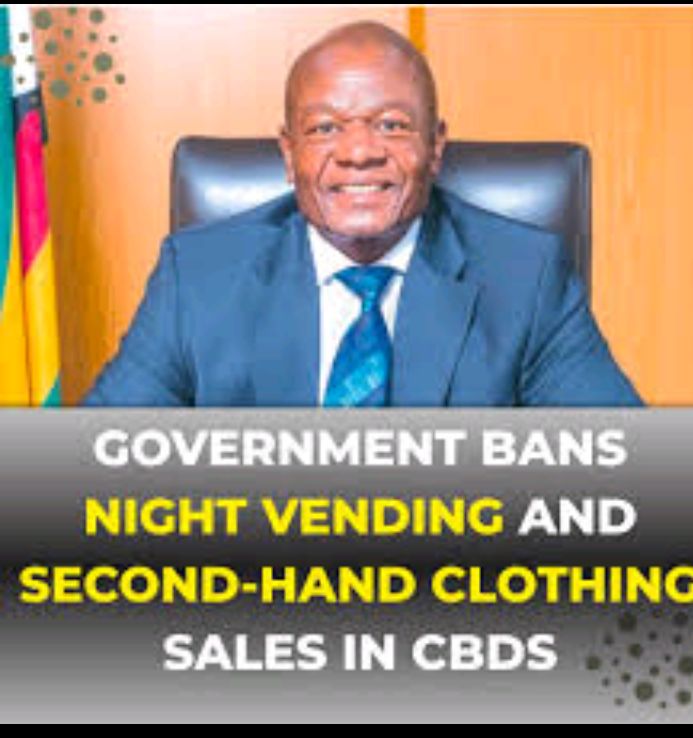
Zimbabwe Bans Night Vending and Second-Hand Clothing Sales
Natalie Nyathi
The Zimbabwean government has announced an immediate ban on night vending and the sale of second-hand clothing in the Central Business Districts of all local authorities. Minister of Local Government and Public Works, Daniel Garwe, made this announcement during a meeting with City of Harare councillors, stressing the need for immediate enforcement.
The government decided to take this action due to concerns that these informal trading activities undermine formal businesses and contribute to illegal activities. There are also worries about public health, the economy, and national security. Minister Garwe pointed out that night vending has led to an increase in drug use and that street vending disrupts formal businesses that pay taxes and support the local economy.
This is not the first time the government has tried to regulate or ban the sale of second-hand clothes. A similar ban was introduced in 2015 but was reversed in 2017 due to pressure from vendors. Instead, the government had imposed import duties on second-hand clothing.
The ban has sparked debate, as many people rely on the informal sector, including vendors of second-hand clothing, for their livelihoods. A large part of Zimbabwe’s economy operates informally, with many workers engaged in informal jobs. Selling second-hand clothes and street vending has become a primary means of survival for many, especially given the high unemployment rates and economic difficulties in the country.
Critics of the ban, including former opposition leaders, argue that the government is punishing the poor instead of addressing the deeper issues causing economic hardship. They believe that vending is a result of desperation, with many Zimbabweans resorting to street sales simply to make a living.
The government has instructed local authorities to implement the ban in a humane way, urging law enforcement to avoid harassment and engage positively with vendors. However, past clean-up operations have sometimes resulted in injuries, raising concerns about how the ban will be enforced.
This ban reflects the government’s ongoing efforts to regulate the informal sector and protect formal businesses. The government sees the informal sector as operating outside the rules, including registration, taxes, and licenses. The long-term goal is to create a more stable and regulated economy.
Implementing the ban may be difficult, given the size of the informal economy and how many people depend on these activities. The government’s success will rely on its ability to enforce the ban humanely and provide alternative opportunities for those affected.