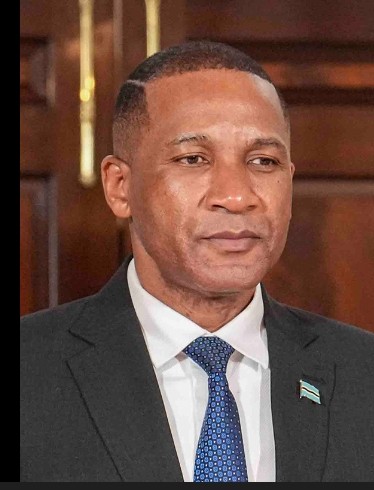
Beyond Diamonds: How Boko’s Gambit is Reshaping Botswana’s Economy
A bold strategy of domestic diversification and regional muscle-flexing is moving Africa’s miracle economy beyond its precious comfort zone.
DUMISANI NYONI
IN Gaborone–Botswana’s capital–the air hums with a familiar prosperity, built over decades on the world’s most sought-after gemstones.
Diamond sorting facilities stand as pillars of an economy that transformed a nation from one of the continent’s poorest into an upper-middle-income beacon. Yet beneath the gleam of polished stones,a profound and urgent transformation is now underway.
For Botswana, the critical question has evolved. It is no longer about how to manage diamond wealth, but how to build an economy that can thrive long after the last gem is pulled from the earth.
President Duma Boko’s administration is betting on a two-pronged strategy: an aggressive push for domestic diversification and a strategic recalibration of its external partnerships, most notably with diamond giant De Beers.
This is more than mere economic policy; it is a high-stakes national project to future-proof Botswana and, in the process, offer a new blueprint for resource-rich nations across Southern Africa.
The Imperative for Change
Botswana’s success story is legendary. Decades of prudent governance and a historic partnership with De Beers, channelled through Debswana, funnelled diamond revenues into national infrastructure, education, and stability.
Paradoxically, this very success has now revealed a profound vulnerability.
As analyst Louise Van Cauwenbergh noted in the Credendo newsletter, “Botswana is negatively affected by a persistent drop in diamond prices of approximately 30% since 2022. The global diamond market does not show any signs of recovery and has likely taken an unalterable turn resulting from the rise in synthetic diamonds. Due to its high dependency on the diamond sector and lacking economic diversification, Botswana is expected to register its second contractionary year in a row in 2025.”
This stark reality has catalysed action.
“We are looking to power the economy of Botswana. We are looking to diversify it,” President Boko told Reuters recently, outlining a new focus on the green economy, climate-smart agriculture, renewable energy, and a broader mining sector.
The urgency is echoed by officials. Naledi Madala, a Senior Policy Advisor at Botswana’s Ministry of Finance, explained that the economy has been exposed to shocks, including weak demand for natural diamonds, which has plunged government revenues and put them under immense pressure.
“Our economy needs several forceful structural reforms,” she said. “We are confident that the shifting global macroeconomic dynamics are giving us an opportunity to rebuild and diversify our economy to its full potential.”
Bogolo Kenewendo, Botswana’s Minister of Minerals and Energy, said diamonds have been Botswana’s blessing, but over-reliance on a single commodity presents a clear long-term economic risk.
“Securing greater control over the entire value chain,” she argued, “is a logical step toward economic diversification and sustainability.”
The numbers underscore the challenge. Despite efforts, the mining sector still contributes over a quarter of GDP and the vast majority of government revenue. With a burgeoning youth population demanding jobs that the mines cannot provide, the status quo is a ticking clock. President Boko has positioned himself as the leader to reset it, framing diversification not as a choice, but as a national necessity.
The Domestic Front: Sowing a Hundred Flowers
The government’s “Reset Agenda” is a comprehensive, all-of-economy approach designed to plant new seeds of growth across several key sectors:
Tourism: The strategy is shifting from high-volume to high-value. The focus is now on cultivating exclusive eco-tourism in the Okavango Delta and Chobe National Park, encouraging investment in luxury lodges while ensuring benefits flow to local communities through innovative conservancy models.
Agriculture: The goal is to move beyond subsistence farming to commercial agriculture and enhanced food security. New initiatives promote climate-resistant crops and seek to modernise the traditional beef sector—a longstanding cornerstone of the rural economy—for premium export markets.
Financial Services: Gaborone is being actively pitched as a stable, sophisticated financial hub for the region. “The programme will establish Botswana as a regional anchor for cross-border financial activity,” Boko said, “leveraging our legal certainty, political stability, and reputational standing.”
Energy: Endowed with some of the highest solar irradiation levels in the world, Botswana is making a major push into renewables. Vast solar farms are emerging from the Kalahari, with the aim of powering future domestic industries and even exporting surplus energy to neighbouring countries.
The Regional Gambit: The Power of the Collective
Perhaps the most astute element of this strategy has been to look outwards for strength. As a landlocked nation, Botswana has historically depended entirely on South African ports and infrastructure. That dynamic is now decisively shifting.
While a formal Botswana-Namibia-Zambia consortium is often discussed in policy circles, concrete progress is already visible in bilateral agreements. The most significant of these is the Kazungula Bridge and the ongoing development of the Trans-Kalahari Corridor with Namibia, which creates a direct and efficient link to the port of Walvis Bay.
As Namibia’s Minister of Works and Transport, John Mutorwa, and his Botswanan counterpart, Eric Molale, have stated, projects such as the Trans-Kalahari Railway promise to enhance both nations’ positions as key players in African trade and logistics. This collaboration not only reduces dependency on South Africa but also creates a powerful new negotiating bloc for everything from tariffs to future resource deals, giving Gaborone a far stronger hand on the continental stage.
The New Deal with De Beers: Rewriting the Rules
The most dramatic symbol of Botswana’s new assertiveness is its renegotiated deal with De Beers. After months of tense negotiations in 2023, the government secured a landmark agreement.
Under the old model, Debswana’s diamonds were sorted and sold in London by De Beers. The new deal stipulates that Botswana’s state-owned Okavango Diamond Company will now take 30% of production (up from 25%) to be sold on its own terms. Crucially, a larger share of the rough diamond sorting, valuing, and sales will now take place on Botswanan soil.
This represents far more than a simple revenue share tweak; it is a fundamental shift in philosophy. It is about sovereignty, skills transfer, and owning the entire value chain. Botswana is no longer content merely to dig diamonds out of the ground; it is determined to learn how to brand, market, and sell them itself, building a resilient diamond industry rather than just operating a mine.
This move has been welcomed internationally. Elodie Daguzan, Executive Director at the World Diamond Council, told VOA in February 2025 that the organisation was “thrilled about this development which underscores the importance of long-term, stable partnerships in the diamond sector.”
She added, “Botswana has been a leading example of how responsible diamond mining, through successful collaboration with the private sector, can drive sustainable growth.” Daguzan also believes the agreement will “provide much-needed confidence to members of our industry, who are currently navigating a particularly challenging market.”
Qatar’s US$12 Billion Investment
Adding further momentum to this diversification drive, Boko announced on August 21, 2025 a major agreement with Qatar’s Al Mansour Holdings. The Gulf firm has committed to US$12 billion in investments across various economic sectors in partnership with the state-owned Botswana Development Corporation. The deal will focus on key areas including infrastructure, energy, mining, diamond refinement, agriculture, tourism, cybersecurity, and defence.
“This historic move,” said Boko, “will be enough to address immediate challenges facing the country.” For a nation renowned for its diamond wealth, this partnership is a significant step in its strategy to attract foreign investment and strengthen its position in global markets.
Conclusion: A Model for the Region?
President Boko’s strategy is a multi-pronged gamble: to urgently diversify the economy at home, build powerful regional alliances for strength and leverage, and renegotiate legacy deals for greater fairness and value retention. The challenges ahead remain immense—from bureaucratic inertia and global economic headwinds to the sheer difficulty of building competitive new industries from scratch.
Yet the central bet is clear: that strategic foresight and bold negotiation can defy the so-called resource curse. If it succeeds, the ultimate victory will not be measured in GDP figures in Gaborone alone. It will resonate in the capitals of Windhoek, Lusaka, and other resource-rich nations still seeking a path to truly self-determined, sustainable prosperity. Botswana is playing hardball with its future, and the entire region is watching closely.
Ends