Natalie Nyathi
In a notable departure from his steadfast support for Israeli Prime Minister Benjamin Netanyahu, US President Donald Trump has publicly criticized Israel’s recent airstrike in Doha, Qatar. The strike, which targeted senior Hamas leaders, has sparked international condemnation and threatens to undermine ongoing negotiations for a Gaza ceasefire.
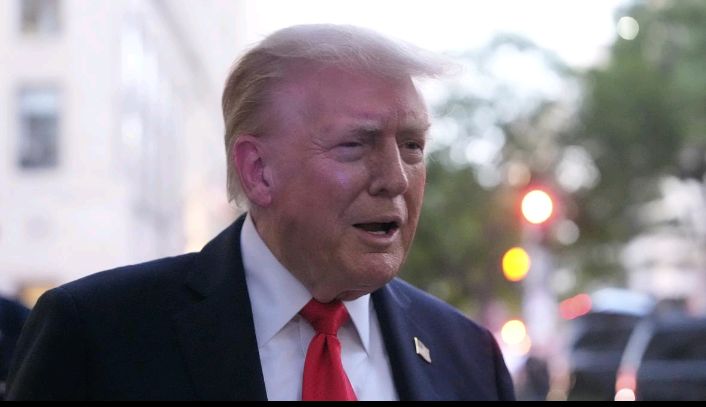
Trump voiced his disapproval, stating he was “very unhappy” with the attack and its location. He emphasized that the decision to strike was Netanyahu’s, not his, and that such unilateral actions within Qatar, a close US ally, do not advance the goals of either nation. “This was a decision made by Prime Minister Netanyahu, it was not a decision made by me,” Trump asserted.
The strike’s timing and location are particularly sensitive. Qatar has been a crucial mediator between Israel and Hamas, hosting Hamas’s political bureau since 2012 and playing a key role in facilitating indirect negotiations. Furthermore, Qatar hosts the Al Udeid Air Base, which houses around 10,000 US troops and is vital to US military operations in the region. Qatar has also made significant investments in the United States.
The US and Qatar have maintained strong diplomatic and economic ties since 1972. Qatar has been designated a major non-NATO ally by the United States, reflecting the strategic importance of the relationship.
Trump stated that he was notified of the impending attack by the US military, but it was “too late” to stop it. He directed his Special Envoy to the Middle East, Steve Witkoff, to inform the Qataris, but the warning came as the attack was already underway.
Adding to the controversy, Qatari officials have denied receiving advance warning from the US, contradicting the White House’s claims. A spokesperson for Qatar’s Foreign Ministry stated that the call from a US official came as explosions from the Israeli attack were already audible in Doha.
Despite his criticism of the strike, Trump reiterated that eliminating Hamas remains a “worthy goal.” He also expressed hope that the “unfortunate incident” could create an “opportunity for PEACE.” Trump has since spoken with both Netanyahu and the Emir of Qatar, Sheikh Tamim bin Hamad Al Thani, assuring the latter that such an event would not recur on Qatari soil. He also directed Secretary of State Marco Rubio to finalize a defense cooperation agreement with Doha.
The Israeli government has asserted that the strike was a “wholly independent Israeli operation.” However, the attack has drawn widespread condemnation and raised concerns about its potential impact on regional stability and ceasefire negotiations.