Natalie Nyathi
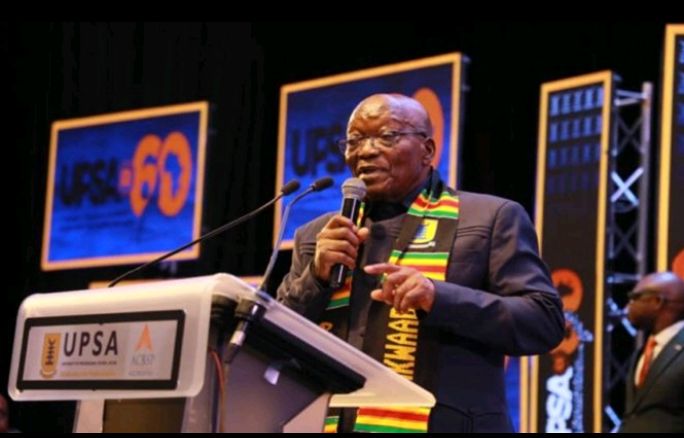
Former South African President Jacob Zuma has recently made a strong case for African nations to adopt a single currency as a vital step toward strengthening intra-African trade and achieving economic independence. Speaking at the 2025 Annual Leadership Lecture at the University of Professional Studies in Accra, Ghana, Zuma emphasized that a unified currency would help break the continent’s reliance on the US dollar and colonial-era financial systems.
In his address, Zuma highlighted that Africa’s continued dependence on foreign currencies undermines its autonomy. He stated, “The reliance on external currencies, particularly the dollar, for our intra-African trade is a chain that keeps us bound to colonial structures.” He urged African leaders to harness the continent’s vast resources and reduce dependency on foreign aid, asserting that Africa needs strategic allies rather than mere assistance.
Zuma pointed out that nearly 80% of Africa’s trade is currently settled in foreign currencies, which he argued restricts regional commerce and economic growth. He warned that if Africa continues to serve primarily as a supplier of raw materials to external markets, inter-African trade would remain meaningless.
Zuma’s mantra, “One Africa, one currency, one destiny,” captures his vision for a more unified continent. He urged the younger generation to embrace self-reliance and pursue policies that enhance global competitiveness. “We must not be spectators. Africa must design its own platforms,” he said, calling for the establishment of African-owned trading platforms and industries that add value to raw materials.
He also discussed the potential of the BRICS bloc as a revolutionary force against what he termed the “dollar empire.” By including African nations, BRICS can help combat global economic inequalities and provide a platform for Africa to assert its economic interests.
While the idea of a single African currency has been debated for decades, Zuma’s intervention adds significant political weight to the conversation. However, implementing such a proposal faces substantial challenges, including economic disparities among African nations and the complexities of coordinating monetary policies.
Despite these challenges, Zuma’s call for a single currency and greater economic independence resonates with ongoing discussions about the African Continental Free Trade Area (AfCFTA), which aims to create a unified market for goods and services across Africa.
Zuma’s advocacy for a single African currency is a bold vision for the continent’s future. By striving for economic independence and cooperation, Africa can take significant steps toward breaking free from historical economic constraints. His remarks at the UPSA Annual Leadership Lecture have sparked renewed interest in the need for a cohesive economic strategy that prioritizes African interests, potentially influencing future discussions on monetary policy and economic integration.