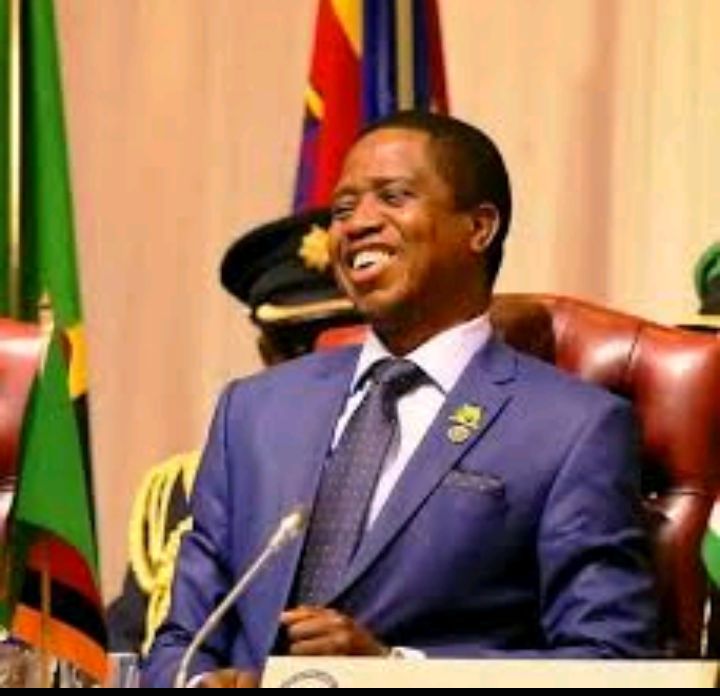
A Nation Divided: The Controversial Legacy of Edgar Lungu’s Death
Natalie Nyathi
The death of former Zambian President Edgar Chagwa Lungu on June 5, 2025, has led to national mourning but also political tensions and accusations against the current government. Lungu, who was president from 2015 to 2021, died at 68 in Pretoria, South Africa, where he was getting treatment for an unknown illness. While the government has declared a mourning period and ordered flags to be lowered, the circumstances of Lungu’s death and his funeral arrangements have become a point of conflict between his family, his political party (the Patriotic Front), and President Hakainde Hichilema’s government.
Lungu’s family and the PF claim that his death was worsened by the government preventing him from getting medical care. According to PF Secretary General Raphael Nakacinda, Lungu was repeatedly denied permission to travel abroad for medical treatment, despite offering to pay for it himself. In one instance, Lungu was reportedly removed from a plane by law enforcement agents. “In 2022, he indicated he needed to travel for his usual medical reviews,” Nakacinda recounted. “Government said they had no money, even when he offered to pay from his own resources.” It was only in late 2024, under the watch of a visiting UN rapporteur investigating human rights conditions in Zambia, that Lungu was able to travel to South Africa for medical care. By then, his doctors informed him that an earlier intervention might have changed his prognosis.
Adding to the controversy, some of Lungu’s allies have gone as far as suggesting that he may have been poisoned to prevent him from contesting the 2026 presidential elections. While no concrete evidence has been presented, the PF is calling for an independent international investigation into the circumstances surrounding his death. Lungu’s daughter, Tasila Lungu-Mwansa, alluded to the family’s belief that his condition may have been the result of “external interference.”
The Star Newspaper in South Africa ran a story with the headline “Edgar Lungu’s Death Sparks Outcry, Allegations of Poisoning and Political Suppression.” The article cited the official silence on the cause of death and the mounting accusations from Lungu’s political allies as reasons for the growing speculation.
A major point of contention has been the Zambian government’s insistence on taking full control of Lungu’s funeral arrangements. The Lungu family, backed by the PF, has resisted this, citing concerns about trust and transparency. According to hospital sources, government officials allegedly tried to repatriate Lungu’s body to Zambia without the family’s consent. Medical staff also reported intimidation and threats. This has led to a standoff, with the family announcing that it would independently repatriate the former head of state.
“The funeral of a former head of state cannot be orchestrated behind closed doors,” Nakacinda insisted. “The party, the family, and the people of Zambia deserve transparency and inclusion.”
Miles Sampa, a member of the PF, stated that the Zambian government must take a backseat to the family, citing their unfair treatment of the former president. He pointed to instances where Lungu was prevented from exercising, attending church, and seeking medical treatment.
The events surrounding Lungu’s death have raised concerns about the state of democracy in Zambia. Critics argue that the government’s treatment of Lungu, both before and after his death, sets a dangerous precedent. “What happened to President Lungu sets a dangerous precedent,” said a representative of the Zambia Human Rights Commission. “If a former president can be silenced this way, what protection exists for the ordinary citizen?”
The Diplomatic Inside reported that Lungu’s death has plunged Zambia “not into national mourning — but into a full-blown political crisis.” The publication, citing several credible sources at Mediclinic Medforum Hospital in Pretoria, alleged that the Zambian government moved swiftly after Lungu’s passing to seize control of the situation, instructing medical staff not to release documentation or updates to the family.
Protests have erupted, with Zambians expressing their anger and frustration over the government’s actions. “HH and his people said Lungu wouldn’t make it to 2026 — and they made sure of it,” said one protester.
Amidst the political turmoil, there have been calls for unity and national reflection. Lungu’s daughter, Tasila Lungu, appealed to the nation to embrace unity and dignity during the mourning period. However, the deep divisions and accusations of political persecution have made it difficult to achieve a sense of national solidarity.
As Zambia mourns the loss of its former president, the controversies surrounding his death and funeral arrangements serve as a stark reminder of the challenges facing the country’s democracy. Whether the coming days will bring reconciliation or further division depends on the government’s willingness to address the accusations of neglect, obstruction, and politicization leveled against them.